Queue Management System in Saudi Arabia: 7 ROI Wins
Every branch manager who installs a queue management system in Saudi Arabia wants the same thing: proof that the investment pays back. Ticket kiosks and calling displays look nice, yet the real value hides in the analytics they generate. This article focuses on returns, not gadgets, and shows seven concrete ways these systems earn their keep across banks, hospitals, and retail counters in 2026.
I have sat with operations teams reading their first month of queue data and watched the surprise on their faces. Numbers they had argued about for years finally appeared on a single dashboard. That clarity, more than any hardware, is what drives the payback.
Return one: fewer walk-aways
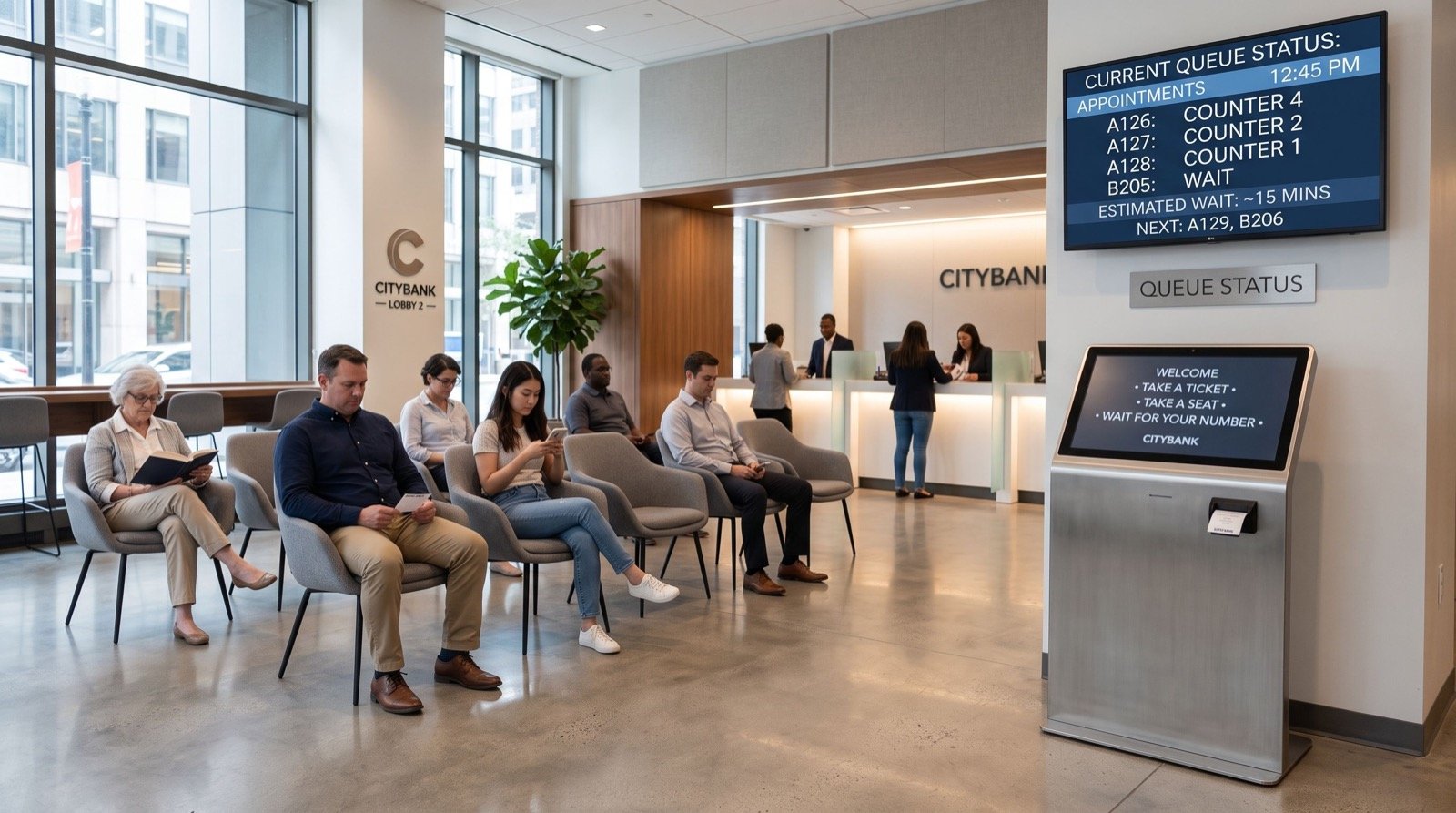
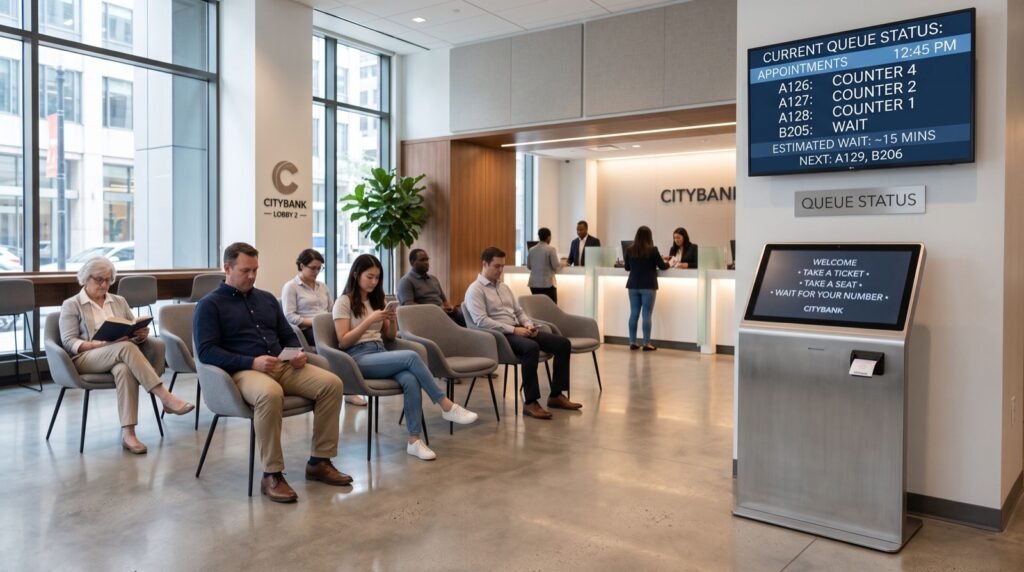
When customers cannot see how long a wait will be, many simply leave. A visible ticket number and an estimated wait time change that behaviour instantly. Retaining even a small share of visitors who would have abandoned the line adds up quickly for a bank or a telecom store.
Abandonment is one of the easiest metrics to track before and after, so it is a great figure to put in front of finance when you justify the spend.
Return two: sharper staffing decisions
Queue analytics reveal your true peaks. Instead of scheduling by habit, you schedule by the hour when tickets actually spike. That single change often removes overtime and idle time in the same week.
What the data actually shows
- Hourly and daily arrival patterns per service type.
- Average handling time by counter and by agent.
- Peak overflow moments that need a floating staff member.
Return three: shorter service times
Routing tickets to the right skill set trims the fumbling that eats minutes. A complex account query goes to a specialist, while a quick bill payment stays on a fast counter. The floor moves faster without anyone rushing.
How do queue systems compare across setups?
The right configuration depends on your volume. The table below compares three common setups so you can match ambition to budget.
| Setup | Reporting | Best for | Payback driver |
|---|---|---|---|
| Basic ticketing | On-site only | Small offices | Order and fairness |
| Analytics tier | Cloud dashboards | Banks, clinics | Staffing and wait cuts |
| Omnichannel | Cloud plus mobile | Chains, ministries | Appointments and lane control |
Return four: appointments that reduce crowding
Pre-booked appointments let visitors arrive at a slot instead of a scrum. Lobbies stay lighter, staff prepare in advance, and customers feel respected. This is especially valuable for government service centres serving Vision 2030 experience targets.
The Saudi Central Bank has long emphasised service quality in the financial sector, and orderly customer flow supports the wider compliance and experience culture it promotes. You can review its role on the Saudi Central Bank official website.
Return five: extending order to the drive-thru
Retention does not stop at the front door. Food and pharmacy brands recover a large share of revenue from customers who stay in their cars, so pairing a lobby queue with strong Drive Thru Solutions keeps both channels measured under one roof. When the same team sees indoor tickets and outdoor lane timers together, the whole operation tightens.
An integrated queue management system in saudi arabia that spans lobby and lane removes the blind spot most single-channel branches never notice.
Return six: better feedback loops
A quick satisfaction tap after service ties each rating to a specific counter and service type. That lets managers coach with evidence instead of anecdotes, which improves quality steadily rather than in nervous bursts before an audit.
A practical scoring habit
Review feedback weekly alongside service times. When a low score lines up with a long handling time, you have found a training opportunity, not a bad employee. Frame it that way and your team will trust the data.
Return seven: cleaner audits and reporting
Exportable reports make internal reviews far less painful. Rather than reconstructing a busy week from memory, you pull the numbers. For regulated sectors, that traceability is worth real money in saved effort.
When you plan a rollout, choose reliable local experts who can survey the site, integrate reporting into your workflow, and train the team so the analytics actually get used.
Turning data into an action routine
Numbers only pay back when someone acts on them. The branches that get the strongest ROI build a simple weekly rhythm around their queue data instead of glancing at a dashboard once a month. That routine is where the seven wins compound.
Start each week by pulling the previous week’s waits, service times, and satisfaction scores. Compare them to the week before and pick just one thing to change. Small, steady adjustments beat dramatic overhauls that nobody sustains.
- Review one dashboard together as a team every Monday.
- Agree on a single improvement to test that week.
- Check next week whether the change moved the number.
Building the finance case
When you present the investment upward, translate minutes into money. Fewer walk-aways become retained transactions, and trimmed overtime becomes a payroll saving. Finance teams respond to those figures far more than to a description of a nicer lobby.
Keep a simple before-and-after snapshot from your first full month. A one-page comparison of wait times and abandonment is often all it takes to justify a second site rollout.
Frequently Asked Questions
How quickly can a queue system show ROI?
Many branches see measurable wait-time and abandonment improvements within the first month. Staffing savings usually appear once managers act on the first full cycle of arrival-pattern data.
Do I need cloud reporting or is on-site enough?
Small single sites can start on-site, but any business chasing ROI benefits from cloud dashboards. Cloud reporting is what turns a ticket machine into a genuine operations tool.
Can a queue system and drive-thru share one dashboard?
Yes. Integrated platforms let a single team monitor lobby tickets and drive-thru lane timing in one view, which is where a lot of the combined efficiency gains come from.
Is the analytics data hard to understand?
No. Modern dashboards summarise waits, service times, and satisfaction in plain charts. The skill is in acting on the numbers, and a good installer will coach your team on exactly that.
Conclusion
The business case for a queue management system in Saudi Arabia rests on data, not decoration. From fewer walk-aways to smarter staffing and a measured drive-thru lane, the returns are concrete and quick to track. Decide which of these seven wins matters most to your branch, then ask a trusted installer for a survey and an ROI-focused proposal in 2026.