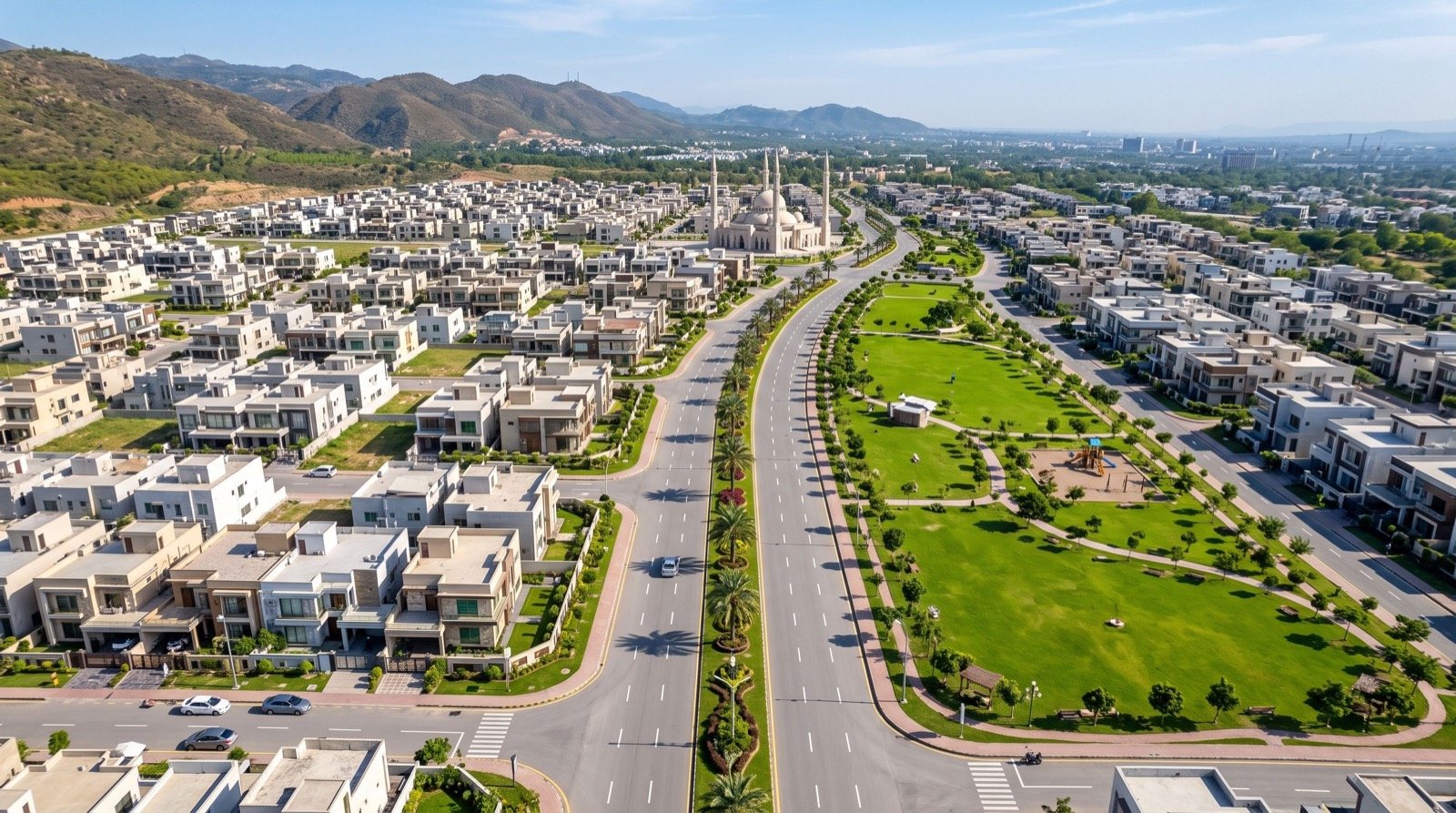
High Rise Plots in Islamabad: A 2026 Buyer’s Playbook for Vertical Living
Islamabad is growing upward, not just outward. In 2026, high rise plots in Islamabad have moved from a niche curiosity to a mainstream choice for investors who want apartments, mixed-use towers, and modern serviced units. If you have watched land prices climb while usable ground shrinks, vertical development starts to make obvious financial sense.
This playbook walks you through what a high rise plot actually gives you, how approvals work near the capital, and the numbers that separate a smart purchase from a stalled one. The goal is simple: help you buy with confidence rather than hype.
Why High Rise Plots in Islamabad Attract Serious Buyers
Ground-level plots sell space once. A tower monetises the same footprint many times over. That single idea drives most demand for vertical parcels around the capital.
Buyers I speak with usually cite three motivations. First, rental yield stacks floor by floor. Second, construction can be phased, so capital is not locked all at once. Third, apartments suit the young professionals and small families now filling the twin cities.
- Higher usable ratio: a small parcel supports far more saleable area.
- Rental depth: multiple units mean income does not vanish when one tenant leaves.
- Resale liquidity: mid-range apartments sell faster than large single homes.
- Amenity appeal: lifts, security, and shared parking justify premium rents.
For buyers weighing a vertical parcel, projects offering High Rise Plots in Islamabad near the New Islamabad International Airport corridor have drawn attention because access and future demand line up well.
How Approvals and Zoning Work Around the Capital
You cannot build a tower anywhere. Height, floor area ratio, and setbacks are governed by the relevant authority for each zone. Getting this right before you pay is non-negotiable.
The Capital Development Authority publishes building regulations that shape what a high rise plot can legally become. Review the official guidance through the Capital Development Authority before committing, and confirm which regulatory body covers your exact location, since some corridors fall under Rawalpindi or private-society jurisdictions.
What to verify before signing
- Confirm the approved land use permits residential or commercial high rise.
- Check the maximum permissible height and floor count for that block.
- Request the master plan showing road width and access to your parcel.
- Verify utility provisioning: sewerage capacity matters more for towers.
- Ask for an NOC reference and cross-check it with the issuing authority.
High Rise Plot vs Standard Plot: A 2026 Comparison
Numbers make the choice clearer than adjectives. The table below contrasts a typical vertical parcel with a conventional residential plot.
| Factor | High Rise Plot | Standard Residential Plot |
|---|---|---|
| Primary income model | Multiple rental or sale units | Single home rent or resale |
| Upfront construction cost | Higher, phaseable by floor | Lower, single build |
| Approval complexity | Higher (height, FAR, fire) | Standard building bylaws |
| Yield potential | Strong when occupancy holds | Moderate and steady |
| Best suited to | Developers and pooled investors | End users and small savers |
Reading the 2026 Market Before You Commit
Prices in and around Islamabad firmed up through 2025 and early 2026 as construction input costs stabilised. Vertical parcels in serviced blocks with confirmed possession moved fastest, while files in undeveloped sectors lagged.
One practical insight from the ground: possession-ready parcels command a premium that is usually worth paying. A cheaper file in an undelivered phase can tie up your money for years. Match your timeline honestly to the project’s development stage.
Location logic still rules everything. Parcels near the airport, motorway interchanges, and CDA plots for sale in Islamabad within planned corridors carry a natural demand cushion because commuters and businesses gravitate toward connectivity.
Signals of a genuinely investable parcel
- Approved layout with visible on-ground development, not just renders.
- Clear title and a transfer process handled through the society office.
- Wide access roads that can handle tower traffic and parking overflow.
- Nearby occupancy, because tenants follow existing communities.
Working with an experienced local team shortens this due diligence dramatically, since they already know which blocks carry clean paperwork and which do not.
Financing and Exit Planning
Vertical projects reward patient, structured capital. Decide upfront whether you plan to build and hold, build and sell units, or simply flip the plot after development milestones lift its value. Each path carries a different cash-flow rhythm, and confusing them is how first-time investors run out of money mid-build.
If you are pooling funds with partners, put the profit split, timelines, and exit triggers in writing before a rupee changes hands. Most disputes I have seen came from vague verbal understandings, not from the market itself. A one-page agreement covering contributions, decision rights, and a dissolution clause prevents years of friction.
Keep a contingency reserve of at least ten to fifteen percent of your build estimate. Construction costs in the twin cities have proven volatile, and a buffer is the difference between finishing on schedule and watching an unfinished shell erode your returns.
Three exit routes to model before you buy
- Sell the raw plot after appreciation: lowest effort, lowest return, fastest liquidity.
- Build and sell units: highest return, highest execution risk, longest timeline.
- Build and rent: steady long-term income with slow capital recovery.
Common Mistakes First-Time Vertical Buyers Make
Experience teaches through expensive lessons. Here are the errors I see repeated most often around the capital, so you can skip the tuition fee.
- Chasing the cheapest file: a bargain in an undelivered phase often costs more in lost years.
- Ignoring sewerage capacity: towers strain utilities that were sized for houses.
- Trusting renders over ground reality: always visit the actual parcel, not just the marketing office.
- Skipping the NOC cross-check: a seller’s photocopy is not verification.
- Underbudgeting finishing: the last twenty percent of a tower eats cash fastest.
Slowing down at the paperwork stage is not caution for its own sake. It is the single highest-return activity in the entire purchase, because every rupee saved from a bad title or a zoning surprise is a rupee you never have to earn back.
Frequently Asked Questions
Are high rise plots in Islamabad a good investment in 2026?
Yes, when the parcel sits in a serviced block with approved high rise zoning and real ground development. The multi-unit income model outperforms single homes on yield, but only if possession and paperwork are genuine rather than promised.
How much height can I build on a high rise plot?
Permissible height depends on the zone and the governing authority’s floor area ratio rules. Always confirm the exact figure for your block in writing before purchase, because limits vary between sectors and private societies.
What is the difference between a plot file and a possession plot?
A file is a right to a future allotment in an undeveloped phase, while a possession plot is a delivered, buildable parcel. Possession plots cost more but carry far less timing risk, which matters for tower projects.
Do I need an NOC before building a tower?
Yes. High rise construction requires approvals covering height, structure, and fire safety from the relevant authority. Verify the NOC directly with the issuing body rather than relying on a seller’s copy.
The Bottom Line
High rise plots in Islamabad reward buyers who treat vertical development as a business, not a gamble. Confirm zoning, insist on real possession, and match your capital to the project’s true stage. Do that, and a well-chosen vertical parcel in a connected corridor can compound value across 2026 and well beyond.