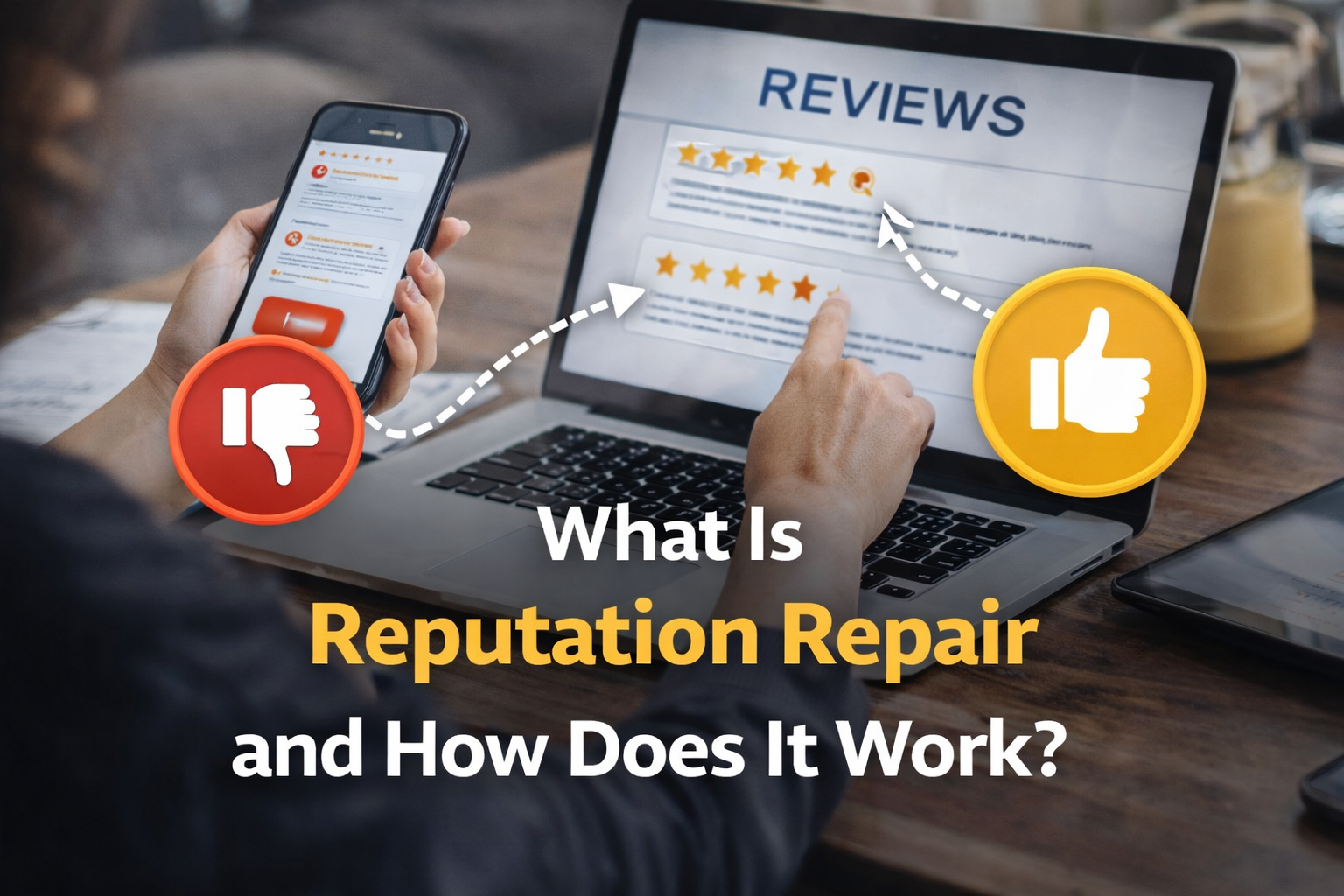
In today’s digital environment, a business’s or individual’s online reputation can be built or damaged faster than ever before. A single negative review, a misleading article, or a viral social media post can shift how potential customers, partners, or employers perceive a brand. Reputation Repair is the structured process of identifying, addressing, and restoring a damaged online reputation and it has become an essential discipline for businesses and individuals alike.
Understanding Online Reputation Damage
Before exploring what reputation repair involves, it helps to understand what causes reputation damage in the first place. Common sources include:
Negative Online Reviews Reviews on platforms like Google, Yelp, Facebook, and industry-specific directories influence purchasing decisions significantly. Studies have found that a majority of consumers specifically look for negative reviews when evaluating a business, and that a single additional star rating can be associated with meaningful increases in revenue.
Negative News Coverage or Blog Posts Articles from news sites, blogs, or press releases can rank prominently in search engine results and persist for years, even if the information is outdated or incomplete.
Social Media Criticism Comments, threads, or posts critical of a brand can spread rapidly on platforms like X (formerly Twitter), Facebook, Instagram, and LinkedIn.
Misinformation and False Content Inaccurate information about a business or individual can be published and shared widely before there is any opportunity to respond or correct the record.
Disgruntled Former Employees or Customers Negative content is sometimes posted by individuals with a personal grievance rather than a genuine customer experience.
Data Breaches or Regulatory Issues Legal or compliance problems that become public can significantly damage the perception of a business.
What Reputation Repair Involves
Reputation Repair is not a single action but a multi-stage strategy. The goal is not merely to remove or hide negative content but to understand what caused the damage, address it honestly, and build a stronger positive presence online.
1. Reputation Assessment The first step is understanding the current state of an online reputation. This means conducting a thorough audit of search engine results, social media mentions, review site ratings, and any news or blog content associated with the brand or individual. The goal is to understand what people encounter when they search, how negative the content is, how prominently it appears, and how broadly it has spread.
Tools that monitor brand mentions across social media, news sources, blogs, and review sites provide real-time data on what is being said and where sentiment is positive or negative.
2. Identifying the Source and Cause Understanding what triggered the reputation damage is essential. If the cause is a legitimate customer complaint, the appropriate response involves addressing the underlying problem. If the damage stems from misinformation, a different strategy applies. A thorough root cause analysis prevents the same issues from recurring and informs the most appropriate response approach.
3. Responding to Negative Reviews and Mentions One of the most visible aspects of reputation repair is how negative content is addressed. Ignoring negative reviews allows criticism to stand unanswered and gives future customers no alternative perspective. Responding promptly, professionally, and constructively to negative reviews demonstrates that the business takes feedback seriously.
The goal of responding to negative reviews is not to win an argument but to demonstrate accountability and the willingness to make things right. Other readers observe these responses and draw conclusions about the character of the business.
If reviews are demonstrably false or violate the terms of service of the review platform, a formal request for removal can be submitted.
4. Encouraging Positive Reviews One of the most effective long-term strategies in reputation repair is generating new, genuine positive reviews from satisfied customers. When positive reviews begin to outnumber and outweigh negative ones, the overall rating improves and the negative content becomes proportionally less significant.
Most satisfied customers do not think to leave a review unless asked. A systematic approach to requesting reviews through follow-up emails, text messages, or direct requests creates a consistent stream of new positive feedback.
5. Content Creation and Suppression Search engine results are one of the most visible components of an online reputation. When negative content appears prominently in search results, creating new, high-quality positive content can help push unfavourable results lower on the page over time.
This involves publishing optimised blog posts, press releases, professional profiles, social media content, and other authoritative material that ranks well and presents the brand accurately. This approach, often called content suppression or search result improvement, requires a long-term commitment as it takes time for new content to earn ranking authority.
Removal of negative content is also pursued when possible. When content violates a search engine’s terms of service, is factually incorrect, or is protected by copyright, formal removal requests can sometimes succeed. However, removal is not always achievable, making suppression strategies important.
6. Social Media Profile Management Creating and maintaining official, active social media profiles ensures that a business controls a significant portion of its own online presence. When branded profiles on major platforms are properly set up and regularly updated, they tend to rank in search results for the brand name pushing other content further down the page.
7. Monitoring and Ongoing Management Reputation repair is not a one-time effort. Once a reputation is restored, ongoing monitoring is necessary to catch new negative content early and respond before it gains traction. Setting up brand monitoring alerts through tools that track mentions across the web allows for a rapid response to new mentions, whether positive or negative.
How Long Does Reputation Repair Take?
The timeline for reputation repair depends heavily on the severity of the damage and the strategies employed. Minor review problems may begin to improve within weeks as new positive reviews come in. Search result improvement through content strategies typically takes several months to over a year, as new content must earn authority before outranking established negative results.
Regardless of the timeline, proactive and sustained effort consistently produces better outcomes than inaction or delayed response.
Why Reputation Repair Matters
The financial and professional implications of a damaged online reputation are significant. Research indicates that just a single prominent negative search result can cost a business a meaningful percentage of potential customers. For individuals, a damaged professional reputation can affect career opportunities, professional relationships, and personal well-being.
Beyond the immediate loss of business, reputation damage can be cumulative negative content attracts more negative attention, discourages positive reviews, and makes it harder to attract talented employees or business partners.
Reputation Repair, when approached strategically and professionally, addresses these risks directly and systematically, building a foundation of positive, accurate online presence that serves a brand or individual well for years into the future.